Monday, March 18, 2024

On Making No Promises

Hello! If you're reading this: thanks for checking out my blog! I hope you get something out of it, maybe something meaningful or enjoyable or interesting.

I started this blog a full ten years ago. I made a total of three entries during that time...and at one point, I was really determined to "get it going again" and revive the blog. I made a post about how readers could look forward to lots more content "coming soon." But of course...that didn't happen.

And now here I am, all this time later, deciding to pick it up again. But this time, I'm making no promises. I have no idea how often I'll be writing new entries. Maybe it will be years again before my next one. Who knows?

I am keeping up this blog as my own writing project and making it public so that others can read it if they desire to do so, and hopefully it will be something people are glad they read. But other than that, it's just going to be me writing about movies, at my own pace.

So I'm sorry (for the approximately 30 readers out there somewhere 😉) that the posts won't be coming regularly. I hope you'll still check back now and then! Maybe you'll wander back to this blog the same way I eventually wandered back all these years later...maybe just in time for a new post? Time will tell!

In any case, God bless you, and thanks again for reading!

Sunday, March 17, 2024

Wonka

This is a blog entry about the film Wonka (2023) and the ways the gospel can be glimpsed through its storytelling. It's not a film review, nor am I making any assertions about what the creators intended with this story. Just my reflections as a Christian who loves watching movies. I hope you enjoy!


Well, I can say that in many ways I was surprised by this film. Let me name a few:

  • This film was not advertised as a musical, yet in the very first seconds of the film, the beautiful and talented Timothée Chalamet as Wonka begins singing the opening song! I was completely taken off-guard!

  • To be quite honest, after seeing posters and one trailer for this film, my expectations were very low. But I was pleasantly surprised by how enjoyable and engaging the movie was!

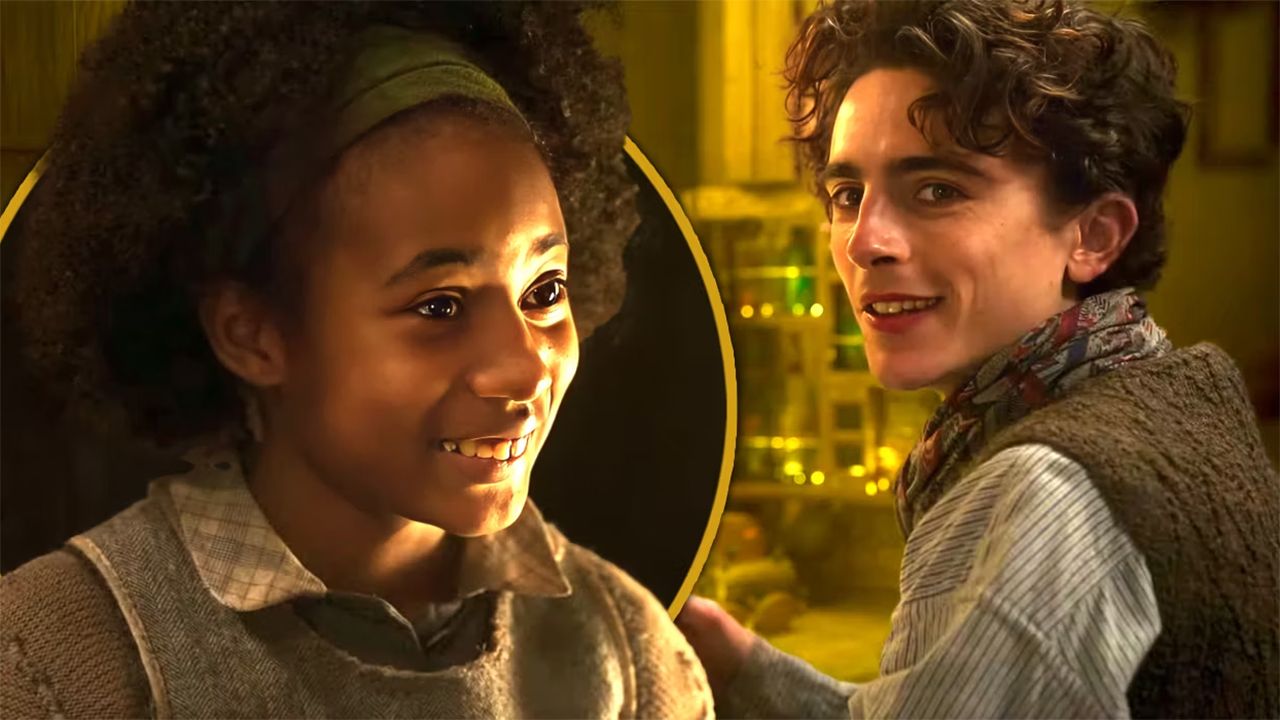
  • Similar to my overall low expectations (maybe I'm too sinical?) I was expecting the "child orphan" character, Noodle (portrayed by Calah Lane), to be another child-actor performance that's painful to watch. But instead I witnessed a performance that was completely enjoyable! She ended up being my favorite character/performance in the whole film!

But of all these surprises, I was most delightfully surprised while watching the film that the story painted a picture that reminded me so much of the story of Jesus.


from https://www.rottentomatoes.com/m/wonka

Wonka as a Jesus Figure

Depending on the way you watch films and your personal background, you might think this is a crazy idea. I admit that it does sound strange. But if you would care to listen, I will explain.

Spoiler Alert! Please note that I will be discussing several important plot points from the film, so if you want to see the movie free of spoilers, go watch it now and come back afterwards :)


A Single Purpose and a Single Sovereign

The opening song of Wonka shows our protagonist arriving in the city that has been his singular focus and intended destination for many years (seven years to be exact, a very Biblical number 😉).

In the song, he describes how he's got only "twelve silver sovereigns" and "a hatful of dreams." (Twelve, another Biblical number! Coincidence? If only I could ask the writers!) And by the end of the song, upon entering the city, Wonka has only one sovereign left.

Yet with no other money or possessions besides these and the tattered clothes on his back, Wonka is unfazed. He is only hopeful, optimistic, and confident. He's knows he's got something incredible to show this city. "I got nothing to offer but my chocolate" he says.

Wonka sets out with the memory of his mother to guide him. She was the reason he first loved chocolate. Her presence is with him "whenever I share my chocolate with the world," he says.

This setup reminds me so much of the foundation of Jesus' years of ministry.

 _________________________________________________________

"When Jesus had called the Twelve together, He gave them power and authority to drive out all demons and to cure diseases, and He sent them out to proclaim the Kingdom of God and to heal the sick. He told them: 'Take nothing for the journey—no staff, no bag, no bread, no money, no extra shirt.'" -Luke 9:1-3, NIV 

__________________________________________________________

After becoming an adult and spending a certain amount of time isolated in the wilderness (40 days in the dessert for Jesus versus seven years at sea for Wonka), Jesus began His ministry in various cities in the ancient near-East. And like Wonka, Jesus had one special city on His heart as His final destination. Wonka's fictional city was unnamed in the film, but for Jesus, this was Jerusalem.

Jesus, too, set out on His journey with very few material possessions and no place to lay His head (Luke 9:58). But what He did have was more valuable than anything else: the indwelling presence of the Holy Spirit (Luke 3:22), intimate communion with and obedience to His heavenly Father (John 6:38), and a singular mission: to save lost people (Luke 19:10) and to announce the year of Jubilee, the coming Kingdom of God (Luke 14:17-21, Matthew 4:17).

Yes, Jesus' good news of God's Kingdom is being compared to Wonka's chocolate in my analogy.

Stick with me!


from https://static.wikia.nocookie.net/warner-bros-entertainment/images/6/68/A_Hatful_of_Dreams.jpg/revision/latest/scale-to-width-down/1000?cb=20231224031215


Jesus came to show people a different kind of world, a world that He could see and that others couldn't quite seem to (yet). This is like what Wonka is doing in the film.

There's a scene in the opening song where Wonka envisions what the world around him might look like if people discovered his amazing chocolates. Everything is changed. There's dancing in the streets! When soon we get another view of his singing in the street, and we see what other people around him see: some guy in the street acting strange.

This is how some people saw Jesus. He had a dream for how the world can be completely different from how we know it to be now. A new world that exists right now, in heaven, and is coming to earth. A world where the rules are totally different. The blind can see. The lame can walk. People love their enemies as much as they love themselves.

 And many people just didn't get it. Probably thought He was crazy. But that didn't stop Him.


from https://img.delicious.com.au/4uxUBBh1/w1200/del/2023/07/wonka-192535-2.jpg

Teaching & Demonstrating the Kingdom, Inviting Others to Taste and See

"My name is Willy Wonka, and I have come to show you a marvelous morsel, an incredible edible, an unbeatable eatable the likes of which this world has never seen..." These are the words that Wonka preaches on his first day of spreading the news that his amazing chocolate is here to share.

In his song "You've Never Had Chocolate Like This" Wonka starts performing miracles and changing people's lives using the power of his incredible, unique chocolates. People are falling in love. They are dancing and singing in the streets! Everyone's worlds are being turned upside-down, the impossible suddenly seems possible.

Basically, when Willy Wonka and his chocolates are around, life just seems better. In John 10:10 Jesus said, "I came that they may have life, and have it abundantly."

When Wonka started, his opening proclamation was that he was going to show everyone a "marvelous morsel." When Jesus started His ministry, He announced "The Spirit of the Lord is on me, because He has anointed me to proclaim good news to the poor. He has sent me to proclaim freedom for the prisoners and recovery of sight for the blind, to set the oppressed free, to proclaim the year of the Lord’s favor" (Luke 4:18-19).

The year of the Lord's favor: this is reference to Jubilee, a celebration of abundance, when debts are forgiven, the earth is given relief, and people can rest from their work and enjoy the feast! It's not life as normal, and it's not following the regular rules of society. It doesn't make sense for people who want to climb the business ladder or accrue more money or land. But it's amazing!

_________________________________________________________

"For the message of the cross is foolishness to those who are perishing, but to us who are being saved it is the power of God...For the foolishness of God is wiser than human wisdom, and the weakness of God is stronger than human strength." -1 Corinthians 1:18,25

_________________________________________________________ 

But you only get to take part in this freeing joy when you choose to take part. "Just try one, and you'll see" seems to be the message Wonka keeps sharing again and again with anyone who will listen. And when people have the courage to try his wacky, "foolish" chocolates, they experience in a powerful way just how amazing it really is! Jesus also invites everyone to participate in His "upside-down kingdom."

Now, Wonka's not making the lame to walk and the blind to see. He is making the bald to grow hair and those lacking confidence with the ladies to grow confidence (this is Willy Wonka after all). But it's a fun and fantastical picture of how joy and goodness can be spread when people take part in his dream (like what we can see when we take part in God's dream for humanity through Jesus).

And just like Jesus didn't set out all alone, Wonka isn't doing all this alone in the film.

And who are the people at the center of Willy's special dream?

I'm glad you asked.


from https://media.npr.org/assets/img/2023/12/13/rev-1-won-d80-00071_high_res_jpeg_custom-3d456f2d6ea83d0a1cd5cba3c2ad3e9e255bfd99.jpeg

Preaching the Kingdom to the Poor and Forgotten

Wonka's closest friends during his campaign to share the joy of his chocolates with the city (and the world) are a ragtag group of people with no money who have been completely forgotten by society. They are essentially living in modern slavery, kept in poor living conditions and forced to work in a laundry to pay off false debts to a corrupt landlady.

This ragtag group become his confidantes and eventually help him in his work to build the kingdom--I mean--the chocolate empire of his dreams! This setup reminds me of Jesus' disciples: a bunch of nobodies from various backgrounds, and maybe not the obvious choices for who would help to build an everlasting Kingdom.

And there is one whom Wonka especially befriends, an orphan girl named Noodle, whom we get to know best and through whose eyes we get to experience Wonka's wonders.

And she is without a doubt presented as "the least of these." She's a child, a girl, has nothing to her name, and no parents. And she's keenly aware of this, too. She sees her situation as one without hope (Wonka playfully calls this "orphan syndrome.") But who could blame her? She's enslaved forever by an insurmountable debt and totally powerless.

But meeting Wonka changes her entire outlook. Maybe it doesn't have to be this way. Maybe it doesn't have to be hopeless. Even in impossible circumstances, when it seems like nothing can be done, Wonka finds a way to turn things on their head and show her possibilities no one would have ever thought were possible.

"The greedy beat the needy every time, Mr. Wonka. Guess it’s just the way of the world," Noodle tells him in one of their first conversations. But she also admits something: she's never had chocolate.


from https://static0.srcdn.com/wordpress/wp-content/uploads/2023/12/edited-image-of-calah-lane-timothee-chalamet-in-wonka.jpg


"We'll soon put that right," responds Wonka. He pulls out his "travel factory" (yes, that's right, everywhere Wonka goes, he carries a little bit of his chocolate factory with him; the analogy is amazing!), and he cooks up a special chocolate for Noodle, with ingredients specially selected to bring her hope, just what she needs.

She tastes it. It's good. But she says she wishes she never tried it, because now each day that she doesn't have chocolate will be that much sadder. But Wonka tells her that he can give her enough chocolate to eat every day for the rest of her life. A never-ending supply.

This reminds me of Jesus speaking to the woman at the well. Jesus told her, “Everyone who drinks this water will be thirsty again, but whoever drinks the water I give them will never thirst. Indeed, the water I give them will become in them a spring of water welling up to eternal life” (John 4:13-14).

This and everything else Wonka does--the way he lives his life as if outside the boundaries of the harshness of reality--makes Noodle look on in wonder, and it changes her life. We're stuck in this prison? Not with Wonka! We have nothing to eat but gruel? Not with Wonka! There's nothing worth feeling hopeful or joyful about? Not with Wonka!

In the song "For A Moment" Noodle sings, "My life has turned upside-down...He's the one good thing that's ever happened to me...And for a moment I kind of forgot to be sad." She poignantly sings "He turns night to day."

Isn't this a great picture of Jesus? Knowing Jesus changes everything. The way He operated--and still operates today--is totally counter to the ways of the world as we know it. How wonderful!
_________________________________________________________
"When Jesus spoke again to the people, He said, 'I am the light of the world. Whoever follows Me will never walk in darkness, but will have the light of life.'" -John 8:12

_________________________________________________________ 

And indeed, almost everyone else who tried Wonka's chocolate tasted it's wonderful effects and felt the same way as Noodle did. Almost everyone...

Unfortunately there were those who tried the chocolate, but denied it's goodness...


from https://parade.com/.image/t_share/MjAxNDU0ODMxNjcwNDcwMjY1/wonka_father_julius.jpg

The Corrupt Leaders Who Sought to Silence Him (Even Kill Him)

But of course, the powerful, the wealthy, those who held a high position in this city and a monopoly on all things chocolate, they were not happy at all with what Wonka was doing. He was a "disturbance." He was a threat. He was giving people chocolate that was utterly unlike anything they could offer.

They would never say as much, of course. But deep down, they knew it.

They envied him (Mark 15:10). They were fearful, thinking "If this guy keeps doing what he's doing, what will happen to us?" (see John 11:48). Their reactions were very different from those of the common people: "...all his opponents were humiliated, but the people were delighted with all the wonderful things he was doing" (Luke 13:7). Sound familiar?

So, the wealthy chocolatiers, some corrupt religious officials, and some corrupt government officials conspire together to assassinate Wonka. I'm not even kidding. It's in the movie!

They give Wonka a deal: they will provide the money to pay off the bogus debts of all his friends, if he will get out of town and never make chocolate again. Wonka takes the deal. But little does he know that the boat they're using to sending him away is actually rigged with explosives to kill him!

So in effect, Wonka sacrifices his own life (and his dream) to save his friends and pay their ransom.

This, of course, reminds me of what Jesus did for us. "For even the Son of Man did not come to be served, but to serve, and to give his life as a ransom for many” (Mark 10:45). But Jesus did not sacrifice His dream when He sacrificed His life. In fact, it was by sacrificing Himself that He made it possible for His dream to come true. Even though it didn't look like that at first.

The corrupt leaders assassinating Wonka thought they got away with it, stopping his dream. Just like the powers of sin and death probably thought they won when Jesus was crucified by the corrupt religious leaders and Roman officials. But this act of self-sacrifice was actually a victory by Jesus over these powers, who could not hold Him in the grave.

For it was through Jesus' death that He was inaugurated as our King, to rise again from death and to reign over us, sitting by God's side, ruling in God's good Kingdom, where everything is right and wonderful forever (Hebrews 12:2, Isaiah 9:7). This is the Kingdom that those who follow Jesus get to look forward to, the Kingdom He is bringing to earth.

For Wonka, he "came back to life" by returning again to the city, not dead, having escaped the bad guys' plot. At the end of the Wonka story, his friends are free, wrongs are put right, and he finally gets to build his factory, a place where dreams come true and where he can make the best most fantastical chocolate to share with the world, bringing joy to everyone who tries them.

It's a happy ending and makes one look forward to the events of the original story of Charlie and the Chocolate Factory and incites the imagination.

Jesus gave up His life willingly so that not only his friends, but also his enemies, could take part in His dream and share His joy forever in His Kingdom.
So Taste and See! His Invitation is for Everyone

It's fun to imagine what it would be like if the fanciful character of Willy Wonka was real and if one could really visit his fantastical factory where the impossible is possible and everything is wonderful and whimsical (well, unless you enter into the factory with malintent...maybe I should write my next post on the allegory of the original Charlie and the Chocolate Factory story...)

But what's true is even better. So much better than an eccentric dreamer and sweets.
_________________________________________________________ 
"Taste and see that the Lord is good; blessed is the one who takes refuge in Him. Fear the Lord, you His holy people, for those who fear Him lack nothing. The lions may grow weak and hungry, but those who seek the Lord lack no good thing." -Psalm 34:8-10

_________________________________________________________ 

The true story of God's Kingdom is so much better than the story of a chocolate factory, for so many reasons. (I've met people in my life who don't like chocolate. What must they feel when they watch a film like this?) But perhaps the most key reason why God's Kingdom is better is that instead of a "world of pure imagination," God's Kingdom is very real.

Jesus said "The kingdom of heaven is like treasure hidden in a field, which a man found and covered up. Then in his joy he goes and sells all that he has and buys that field" (Matthew 13:44). He said "The kingdom of heaven is like a king who prepared a wedding banquet for his son" (Matthew 22:2). He also said again and again, "The kingdom of heaven is at hand" (Matthew 3:2, 4:17, 10:7, Mark 1:15).

_________________________________________________________

Being asked by the Pharisees when the Kingdom of God would come, He answered them, “The kingdom of God is not coming in ways that can be observed, nor will they say, ‘Look, here it is!’ or ‘There!’ for behold, the Kingdom of God is in the midst of you.”                     -Luke 17:20–21

_________________________________________________________ 

So Jesus gave us a taste of this while He was on earth, an "appetizer" for all we can experience if we follow Him into His Kingdom to experience it for ourselves (and share it with others).

Hungry? Jesus can turn a couple of fish into enough food to feed an entire crowd (Matthew 14:13-21).  Even more than that, He said that He Himself is the bread of life, more than just food to keep your body alive, food that will bring you eternal life. 

_________________________________________________________

"Then Jesus declared, 'I am the bread of life. Whoever comes to me will never go hungry, and whoever believes in me will never be thirsty.'" -John 6:35

_________________________________________________________ 

Jesus invites everyone to taste and see for themselves that He is true and good. That He changes everything. That He brings hope to everyone, no matter who you are or what your circumstances may be. He's building His chocolate factory--I mean--Kingdom without end, and He's getting ready to throw open the gates (Isa. 26:2, Rev. 21:25).

Will you come and enjoy? Will you feast at His table? Don't worry if you have no money or feel empty spiritually. At His table, the poor and needy are seated in the seat of honor (Luke 14:10-14, Mark 10:31). All you must do is believe in Him and follow Him there.

Jesus said:

“I am the way and the truth and the life. No one comes to the Father except through me." -John 14:6

"I am the gate; whoever enters through me will be saved."  -John 10:9a

"Blessed are the poor in spirit, for theirs is the kingdom of heaven." -Matthew 5:3

Concluding Thoughts

I know Wonka is just a Hollywood movie. But maybe there's something valuable in seeing God's Kingdom in new and unexpected ways, even fantastical or childish ways? After all, Jesus did say that none could enter the Kingdom unless they became like a child (Matthew 18:3).

Maybe it wouldn't hurt to dream of God's Kingdom the way a child might dream of a world made of candy, and look forward to it with such hopeful joy, excitement, and expectation?

And maybe we can think of ourselves as imitators of Christ, who, like Wonka, walk around with our miniature "travel factories" (or as ourselves vessels for the indwelling Holy Spirit) and break out the Kingdom into our regular, everyday worlds in joyous and surprising ways, showing people that there is another way, there is hope, and inviting them to taste God's goodness.

When we love others and treat others as more important than ourselves, when we forgive and are generous beyond what makes sense to the rest of the world, we are turning things upside-down to show that God's way is the better way, as we pray "your Kingdom come, on earth as it is in Heaven."

I know talking about chocolate factories and the Holy Spirit in one sentence is all a bit silly, but this is how I watch and enjoy movies: in every story I look for the True Story of God and humanity and His great redemption plan for us. I'm glad I got to share this morsel of thought with you.

God's Kingdom is amazing to think about. It's what gives me hope. It's what I dream about.

*******


Thanks for reading!

If you want to learn more about the Kingdom of Heaven, I recommend reading the book of Matthew. If you want to start smaller, you can focus on Matthew chapter 5

Here are some more resources to explore:

https://bibleproject.com/explore/video/on-earth-as-it-is-in-heaven/

https://bibleproject.com/explore/video/gospel-kingdom/

https://bibleproject.com/explore/video/heaven-and-earth/

https://bibleproject.com/explore/video/last-will-be-first/


Film Information:

Wonka. Directed by Paul King, Warner Bros. Pictures, 15 Dec. 2023.

See the film's IMDB page here

Monday, July 10, 2017

Les Misérables (Part I)

Note for if you haven't seen this movie or are not familiar with this story: SEE THIS MOVIE. It's spectacular. Read my introduction below, but do not read beyond. This post will contain spoilers.

from Pinterest

Now, I know what you might be thinking: this is a book/play wayyy before it is a movie. I'm in total agreement. But even so, I can't pass up the opportunity to talk about this story. It's a big one.


In my high school theater class, I stared everyday at a huge poster on the door featuring a pencil-drawn young girl staring wide-eyed into the distance. Also featured on the poster were some French words I didn't understand.

from Theatre Bristol
I had heard my theater teacher mention the name of the play before, lauding it as one of the best. Yet when I asked around amongst my classmates (who were, for the most part, much more familiar with theater than I was) to ask what the play was about, the answer I could remember was "revolutionary France...poor people...political...a man on the run from an officer..." Sounded pretty boring to me.

Then, the next year in my English class, we were going to study it. My cool teacher assured the class that we would not be reading the 1.5 thousand-page novel, but we would instead be watching the movie. At this time, however, the Hugh Jackman movie was not yet created.

from thesqueee.co.uk
So in the small classroom trailer packed with 35 students, we spent two and a half days watching this 1998 versoin, and I fell in love.

This story was not the boring historical drama I had anticipated it to be. The story pulled at my heart and moved it, causing me to see the story of God's love for us in a totally new way.

And though this movie is great, I didn't even know that there was still even more to this story that was yet to be revealed to me.

You see, this 1998 version of Les Mis is done as a "straight play;" it tells the story without the singing. It also has a slight change of focus from the traditional musical; the story centers on Valjean and Javert more than characters like Cosette and Marius. And here's perhaps the major aspect lacking from this interpretation: the character Éponine? not included. At all.

So from this experience, I was swept away by the story, even in absence of the gorgeous music and eloquent love story.

Then came the 2012 movie.

My two best friends pulled me over to their laptop to watch the trailer and marveled alongside me at how every song in the movie would be recorded live on set, not in a studio and added in post.

With my memories of the 1998 version as a foundation, I was beyond excited to see this movie. I love Hugh Jackman. The visuals looked beautiful. I'd finally get, in my mind, the full experience of the story now that I would see the musical version. And singing on the set? Who wouldn't be intrigued!

So when it came into theaters, I saw it and loved it. It instantly earned a place on my Top Ten Favorite Movies list. Now I have the dream of seeing it live on Broadway someday. Someday...

SO, all that is to say, this is an amazing movie and profoundly beautiful story that opened my heart's eyes even wider to the beauty of the story of Christ and his love for His people.

Here I will detail some of the ways this story spoke to me, in a five-part series (yes, it's that good).

from patheos.com
Part I : Valjean and the Bishop
The Heart Change that Comes from Encountering God

Once sequence from this movie that shook me to my core was the scenes between Valjean and the Bishop and Valjean's soliloquy.

Now, I must say, just about every major scene in this movie moves me. And this production is amazing; sometimes I wonder if they designed it to garner maximum tears.

The songs alone in this sequence will move me to tears.

Say what you want about Hugh Jackman's singing, but it is inarguable that he infuses his voice with intense feeling. On top of that, the Bishop in this movie is played by the actor who first portrayed Valjean in the English version of the play in London and on Broadway.

Because of this, whenever I see his face as he speaks to Valjean, I can't help but be brought to tears at the deeper meaning that this role has for that actor, and the deeper symbolic meaning that he brings to the film (it is almost as if a future version of Valjean, or a man just like him, is speaking to him and showing him forgiveness, reminding himself--by speaking to Valjean--of the grace he was given).

SO GOOD!

All that is to say, the delivery of these scenes by these actors and the production around them function so well to powerfully emphasize the content within.

Valjean is a prisoner on parole. He was found guilty for theft after stealing a loaf of bread. He is a man who is judged, condemned, suffering, rejected, and a man who has lost everything. He has just endured 18 years in a prison that deprives its prisoners of their humanity, treating them as animals and slaves, beings lower and more deplorable than any human, only for breaking the law.

What must this man be believing about himself now, and his identity? What must he be thinking about other people? How could they treat him so cruelly? What might he think of God, if he ever thinks of God?

As Valjean is in this state, half-dead, a condemned man, a rejected man, hardly known as a man, an enemy of those who claim to love goodness...God comes to meet with him.

He does this through an encounter with a Bishop.

Valjean is welcomed inside, given a meal, given a bed, treated kindly by a man of God, who, perhaps in Valjean's mind, has no place treating a man so dirty, so sinful, and so low as if he were an honored guest or an equal.

After this has been given freely to Valjean, after night has come, Valjean acts according to the identity that has been forced upon him and beaten into him for 18 years: he is a criminal, he is a theif, he is wrong, he is dirt. Valjean steals as many precious items from the Bishop's house as he can fit in a bag, and leaves.

Then comes Valjean's encounter; God halts Valjean right where he is and shows him who He is.

from YouTube

Valjean is arrested by two officers and thrown at the bishop's feet to be judged, to be condemned and sent away, to account for his actions. But the Bishop does not do these things.

He tells the officers that he gave those things to Valjean, then says to Valjean that he forgot to take the silver candlesticks on the table, for he gave those to him also. The officers leave. Valjean is shown grace; he is not condemned and sent away, back to the suffering and torture of prison.

But the Bishop is not done with Valjean. He then tells Valjean that he must now "become an honest man," that God has a plan for him, that his soul has been saved "for God."

Valjean has been introduced to who Jesus is, because this is who Jesus is; this is what He does for us.

It doesn't happen that Valjean shapes himself up, starts doing more good and making the right decisions, and then God decides that He is worthy of saving, worthy of being loved.

That is not how it works.

God meets us where we are. We are all sinners, enemies of good, enemies of God. But God decides to meet with us, to show us grace, and to change us.

For while we were still weak, at the right time Christ died for the ungodly. For one will scarcely die for a righteous person—though perhaps for a good person one would dare even to die—but God shows his love for us in that while we were still sinners, Christ died for us. - Romans 5:6-8

In sin we are condemned and unworthy, but God in His grace and His unconditional love for us calls us worthy to be with Him, and tells us that we are no longer condemned, and this is all because, in surrendering to God, we are then covered by Jesus' sacrifice for us and given His righteousness.

...the righteousness of God through faith in Jesus Christ for all who believe. For there is no distinction: for all have sinned and fall short of the glory of God, and are justified by his grace as a gift, through the redemption that is in Christ Jesus, whom God put forward as a propitiation by his blood, to be received by faith. This was to show God's righteousness, because in his divine forbearance he had passed over former sins. It was to show his righteousness at the present time, so that he might be just and the justifier of the one who has faith in Jesus. - Romans 3:22-26
God loves us enough to meet us where we are but not let us stay there. Encountering God changes us. He gives us a new identity, to no longer be sinners, but to be called His children.

So just as Valjean is a criminal and thief but is then shown grace and called to "become an honest man" and live "for God," we, when we meet Jesus and surrender to Him, accepting His gift of salvation, are changed, given a new identity, and called to live for God.

But this extreme grace is difficult to wrap one's mind around. It is difficult to understand. Why does God do this for us? Why does He love us, even though we turn away from Him? Why does He give us good things that we do not deserve? Why would He come down to earth and die when He is so much greater and so much higher than us? Why would He want me? Why does He pursue me?

I personally struggle with these questions. God's goodness doesn't make sense sometimes.

Valjean struggles with God's grace in this way, too. He wrestles with who he is and who God says he is and what great love the Bishop and God have shown for him. He does this in a heart-rending, stunning soliloquy.

from reelslave
Valjean struggles to internalize what has happened to him in the Bishop's selfless kindness and what the Bishop told him about himself and the second chance he has been given.

Do I deserve this? Can I actually have new life? Is the mess that I have been living really over and in the past now? These are tough questions to grapple with as a new Christian (even as a more mature Christian, surely!) Every time we sin and repent and are shown grace, given goodness that we don't deserve, these questions might arise in our heart. How can it be true? How can God love me?

He is faithful to us even when we are not faithful to Him. He loved us first.

Also, He's God and He does what He wants. We didn't do anything to compel Him to do this for us. This is just who He is. He is loving and just and gracious and good.

And yet this is still difficult to fathom. But God, as a loving Father, comforts us and assures us of who He is by making promises to us, sometimes they're called covenants. For example, after God flooded the earth and saved Noah and His family, He gave them a rainbow as a sign of His covenant to them that He would never flood the whole earth like that again. (see Genesis 9:13-17)

One Bible teacher shared with me one of her favorite phrases to occur in the Bible: "But God..." Because even when we humans are sinful and do the wrong thing, God is still God. He does not change (see Malachi 3:6), and He keeps His promises, always.

Here's an example of a verse where this shows up, in 2 Kings, while the people of Israel were being oppressed:
But the Lord was gracious to them and had compassion on them, and he turned toward them, because of his covenant with Abraham, Isaac, and Jacob, and would not destroy them, nor has he cast them from his presence until now. - 2 Kings 13:23
God is awesome. I encourage you to read more about God's promises and the covenants He has made with His people.

But, the question still remains: what to do with this understanding? What to do in the face of a God who has shown you grace and loves you so unrelentingly?

This is the center of Valjean's soliloquy. He is at a turning point in life. He wonders which road to take; how now to live his life.

He wonders whether he's too far gone to be turned around. Can he actually abandon the selfish "care only for yourself" way of living that he says is "all I have lived for, all I have known?"

By God's saving power, he chooses to die to himself and his sin and to live a new life.

"Another story must begin" he sings determinedly, ending his scene, ringing in the transition of the next.

And so, God offers us salvation, a chance to die to our old ways and have new (and much much better) life in Him, with His Spirit coming to be with us, guiding and loving us all along our way.

And even when we have already accepted His salvation, He renews us again and again.

Therefore, if anyone is in Christ, he is a new creation. The old has passed away; behold, the new has come. - 2 Corinthians 5:17 
He restores my soul. He leads me in paths of righteousness for his name's sake. - Psalm 23:3
The steadfast love of the Lord never ceases; His mercies never come to an end; they are new every morning; great is Your faithfulness. - Lamentations 3:22-23
When we encounter God, it changes us. When God saves us, He gives us an entirely new life. He sets us free from slavery to sin, so that we can live according to the awesome plan He has for us.

This story is so beautiful. I love Les Mis so much! I hope you enjoy the story as well (no matter which version you're familiar with!) and have gotten something out of this post.

Stay tuned for next time with Part 2 of my Les Misérables series!

Thank you for reading, and please feel free to contribute in the comments.

Sunday, March 15, 2015

Sorry for the lack of posting..


Hello all and any viewers of my blog,

I really appreciate anyone who takes the time to read my posts, and I apologize for my extreme lack of posting. When I started the blog, I had no idea how time consuming writing each piece could be, and being a full-time student, I've had to devote all of my writing powers to my classes lately.

However, I am nowhere near done with this blog. It is only going to keep improving from here.

When summer arrives, I will have much more time for regular posting, and I will hopefully receive more readers as well. Also, summer is an exciting time of new movie releases. I will continue to post about my favorite movies, the newest movies, and any that are thoughtfully suggested by my readers!

Thanks for your patience. If you're interested in reading my posts and seeing which movies I'm discussing, but don't want to check back randomly and find no change, subscribing by email is a great way to be notified of any new posts! You can subscribe using the button on the right.

Thanks again,
best wishes,
kind regards,
and may you see God's grace everywhere and in everything.

Friday, December 12, 2014

X-Men: Days of Future Past

Since it's that time of the year, a lot of the movies I'll be discussing these days are Christmas ones. But to shake things up I'll still discuss non-Christmas movies here and there too, like this one!


from JustWatch

This is a movie I've watched recently that blew me away. When I saw the trailers for X-Men: Days of Future Past, I thought it looked un-promising.

I thought, "Oh, they're making another X-Men movie, and it looks so typical that I don't even need to go see it." But I was wrong.

I am SO glad that I did go see it. I loved it. With me, I can always tell that a movie was really good if I spend hours or days afterward still thinking about it, and this movie definitely did that for me. I thought about the plot and the time traveling and tried to make sense of that, but the main thing I thought about afterwards were the deep, complex themes about life and how we deal with it.

This movie has some great action and comedy throughout, but, being the deep thinker that I am, I mostly adore it because I connect well with its depictions of living in a fallen world, mostly through relating to the character of Young Professor X.


from vanityfair.com

In this movie, a young Charles Xavier is depicted during a time in his life when he is deeply struggling with his superpower of telepathy, a power which makes him able to hear/see/feel what every person in the world does, all the time. It might even better be called "tel-empathy."

I am SO glad that they explored this aspect of the character in this movie, because I've always thought that superpower certainly has the looming potential to devastate the one who possesses it. People, of course, experience joy, love, excitement and more in their life, but with his powers, Xavier sees and feels all the feelings of all the people of the world, a world that is full of evil and suffering and pain. He truly has "seen it all." And in response, he--naturally, I would dare to say--becomes severely depressed.

Though I personally do not possess the gift of telepathy, I as a person possess the "superpower" of regular human empathy. Most people have this power. Yet however much good this power can achieve, this great and necessary gift still presents challenges.

For example, I have difficulty these days watching the news, as I know so many others do too. Even though it is undoubtedly important as a world citizen and Christian to remain up-to-date on what is happening in the world, it can be hard to learn of all the relentless sad stories and all of the evil that affects people. It's usually easiest to just tune it out, to not look at it. But for Charles Xavier, "tuning out" the worldwide pain and suffering of others is not so easy an option.

Xavier turns to drugs to numb his awareness of other people's thoughts and feelings. He tries to stop feeling the pain by any means necessary. This part of the movie was actually really for me hard to watch. As an X-Men fan familiar with the stories, seeing the beloved leader, Professor X, at such a low point is unsettling and even heartbreaking.

The suspense at this point of the movie is based on wondering whether Xavier will ever recover, ever regain hope, ever rise up and help people as only he can.

And the thing is, this "low point," this state of hopelessness, depression, and numbness is what I'd say is a completely natural response to all the pain and suffering and evil that's in the world. Constant awareness of all this pain is naturally overwhelming and depressing. It looks hopeless because it never seems to end, and sometimes it even seems to be getting worse. And even if we were able to hold the awareness of all the darkness and sorrow in the world, we don't have the ability to help everyone.

So at this point, yes: sorrow, hopelessness, giving up... makes sense.

But, praise God, there's more to the picture than that.

The world is actually not hopeless. We actually are not hopeless. Before Jesus left the earth, many days after he had been crucified and resurrected, He spoke to his disciples (see John 16:25-32) telling them that because they have believed that Jesus is from God, God Himself loves them.

They say "yes, we believe you are from God," but Jesus says, "'Do you now believe? Behold, the hour is coming, indeed it has come, when you will be scattered, each to his own home, and will leave me alone. Yet I am not alone, for the Father is with me. I have said these things to you, that in me you may have peace. In the world you will have tribulation. But take heart; I have overcome the world.'

So pretty much He's saying that things are going to get rough (and indeed they are already) but that his followers don't need to be dismayed about it. God wins over evil. God wins over injustice. Jesus conquered death when He died and rose again. Jesus has overcome it all.

Surely there is a future, and your hope will not be cut off. -Proverbs 23:18

This world is filled with evil and turmoil and suffering and sin, but God has seen it, and He has sent a Redeemer! (read Isaiah 59) Jesus took on all of our sin and suffering and pain and has made us able to be one with God again, and He Himself is our peace (see Ephesians 2:14). As individuals, we do not have the power to save everyone, but God has that power, and He has reached down to us to save the world. He offers Himself as a Savior to everyone.

Hope in the Lord! For with the Lord there is steadfast love, and with him is plentiful redemption. -Psalm 130:7


from movieweb.com


So this brings me to another point of the movie that really got to me.

At one point in the plot of the movie, Wolverine asks (begs, really) Xavier to look into his mind, connect with him, and thereby see and feel all of his darkest, most painful moments. Xavier, still in his suffocating depression, responded in the way I probably would've. In tears, he said, "I DON'T WANT YOUR SUFFERING."

Xavier is given tremendous responsibility in his ability to take on so much pain. This, to me, looks like a shadow, an imperfect reflection, of Jesus.

Jesus before His crucifixion was in agony. He was praying in earnest and sweating blood. He knew that He was about to bear the sin of the whole world and drink the cup of the wrath of God. He prayed, “Father, if you are willing, remove this cup from me. Nevertheless, not my will, but Yours, be done.” (see Luke 22:41-44)


from charlesanderik2016

Hallelujah! Even though Jesus was about to undergo terrible pain and suffering--the pain and suffering that sin has brought upon everyone in the world--He was still committed to obeying God's will, and God's will is that sinners be saved and brought together with Him.

Jesus has taken on our sin and pain that we may be saved and be with God forever where there is no sin or suffering or pain; He will wipe every tear from every eye (Revelation 21:4). Yet while we are still living on earth before Jesus' return, where there is sin and suffering and pain, we endure it all, like Jesus, so that we can know Him more intimately by sharing in His suffering (as indeed, He suffered for our sakes) and so that we may live (and even die) to glorify God and to show His love to others.

Not only so, but we also glory in our sufferings, because we know that suffering produces perseverance; perseverance, character; and character, hope. And hope does not put us to shame, because God’s love has been poured out into our hearts through the Holy Spirit, who has been given to us. -Romans 5:3-5

Since Jesus is in heaven now, we are his hands and feet on earth (read Ephesians 4). By His grace and the power of His Holy Spirit, we are called to see and feel (with our superpower of empathy) the pain of others around us, show them love, and introduce them to Jesus, who gives hope and peace and life.

Carry each other’s burdens, and in this way you will fulfill the law of Christ. -Galatians 6:2

Xavier realizes in the movie that he should not give in to his despair but that he plays an important role. He can have an impact on so many people's lives and share hope with them. Even if he can't remove the pain from everyone, he can do so for some, and therefore should. But he needed to be given hope first, and God does that for us. And so we, by the grace of God, should share our hope with others and help others in their pain, just as God helps us in ours. And even though we cannot wipe the tears from every eye, our God can. (How awesome!)

Blessed are those who mourn, for they shall be comforted. -Matthew 5:4

Praise be to the God and Father of our Lord Jesus Christ, the Father of compassion and the God of all comfort, who comforts us in all our troubles, so that we can comfort those in any trouble with the comfort we ourselves receive from God. -2 Corinthians 1:3-4 


So this amazing movie gave a lot of great messages about being saved from hopelessness and also giving hope to others. God loves us and has demonstrated that for us in sending His only son to endure so much pain for us. This movie has several messages that can be applied to our lives, maybe you can find even more. And of course, when we know God, these messages mean so much more.

So I hope this encourages you to find your hope and peace in God, reach out to those who don't have it, and perhaps look for echos of Jesus in other movies or unexpected places.
May the God of hope fill you with all joy and peace in believing, so that by the power of the Holy Spirit you may abound in hope. -Romans 5:13

Suggested verses for further reading:
But this I call to mind, and therefore I have hope: The steadfast love of the Lord never ceases; His mercies never come to an end; -Lamentations 3:20

For I know the plans I have for you, declares the Lord, plans for welfare and not for evil, to give you a future and a hope. -Jeremiah 29:11

Also see Romans 8:19-21 and Galatians 5:5 about hope in this world.


Thanks for reading, I hope you enjoyed it! Please feel free to add to the discussion in the comments below. Also, if you have any movie suggestions for me, let me know!

X-Men: Days of Future Past. Dir. Bryan Singer. Perf. Hugh Jackman, James McAvoy, Patrick Stewart. Twentieth Century Fox Film Corporation, 2014. Film.

Saturday, December 6, 2014

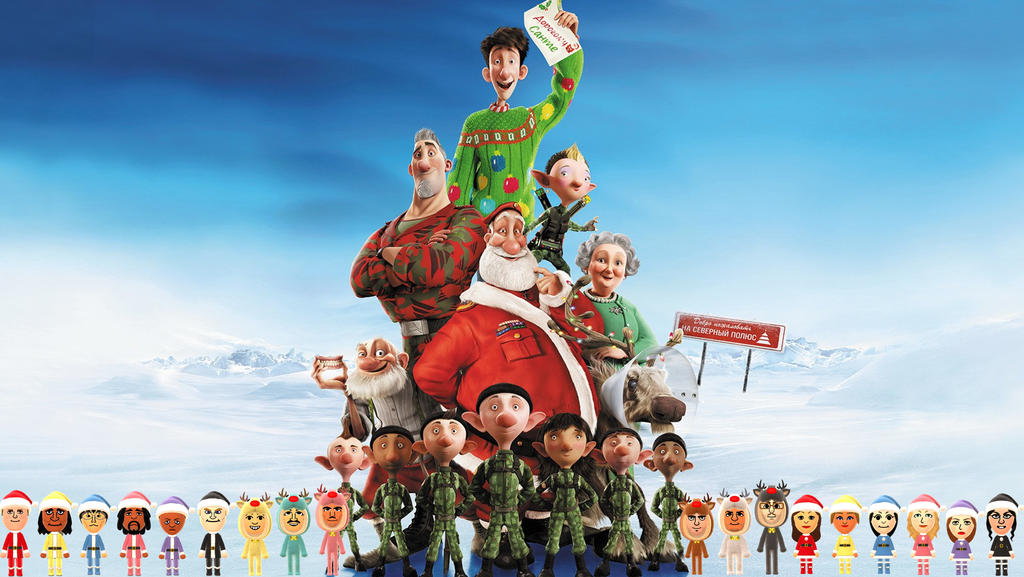
Arthur Christmas

Since it's that time of the year, a lot of the movies I'll be discussing these days are Christmas ones. But to shake things up I'll still discuss non-Christmas movies here and there too.


from https://www.deviantart.com/john-sulu/art/Merry-Christmas-722132984


I watched the film Arthur Christmas for the first time yesterday, and to be honest, I wasn't anticipating a funny, creative movie. But a funny and creative movie it was!

I was expecting your typical animated Christmas family film with furry animals, funny voices, cheesy comedy, and an extremely overdone plot with extremely cliché themes. But this movie had some really funny moments, a unique-enough plot, and not a single annoying talking animal! I really enjoyed it and would actually like to see it again next year.

One of the things that I admired most about the movie, though, was its messages about grace, faith, and works.


from youtube.com

Grace

At the very beginning of the movie, Santa and his elves are doing their work delivering gifts to houses. The sequence shows a lot of high-tech equipment that they use for everything from descending to the houses, communicating with each other, to...scanning whether children are naughty or nice.

Yes, the elves would actually scan the children while they were sleeping to see if they qualified as naughty or nice, deserving or undeserving of their gifts. As this happened, I was thinking about how appalling it is that this jolly Santa in everyone's stories only gives these wonderful gifts to the children who have been good enough.

This is nothing new; everyone familiar with Santa knows how this works.

I just couldn't help but hate that so many people would want to teach their kids this: that if they were too naughty, too bad, then they'd just have to have a Christmas with no presents. Santa would be disappointed in them and withhold all that he would otherwise be giving them.

I was thinking about all of this when something in the movie gave me a huge surprise. It was amazing.

from blueray.com


As an elf scanned one sleeping child, the device blinked red and showed "naughty" as the result. The elf appeared saddened by this, then after looking at the kid, scanned himself so that the device would read nice instead.

What a great picture of grace! What a great illustration of the gospel! and such a simple one that even children watching can understand. Even though the child was "naughty" and thereby didn't deserve gifts from Santa, the elf's goodness replaced it, and the child could receive those gifts after all. As we are also all "naughty," doing what is wrong so often even when there are times when we try to do what is right, God still gives us Himself, the greatest gift we could ever want. That's the gospel. If we've been saved by Jesus, then even in our naughtiness, Jesus is scanned instead of us, and He is 100% good.

Wow. I was really glad that happened.

But now the righteousness of God has been manifested apart from the law, although the Law and the Prophets bear witness to it— the righteousness of God through faith in Jesus Christ for all who believe. For there is no distinction: for all have sinned and fall short of the glory of God, and are justified by His grace as a gift, through the redemption that is in Christ Jesus, whom God put forward as a propitiation by His blood, to be received by faith. This was to show God's righteousness, because in His divine forbearance He had passed over former sins. -Romans 3:21-25 (ESV)

from pinterest.com


Faith

Something that I've learned recently is that it's OK to have faith but still have questions. It's actually an essential part of faith. As Martin Luther King Junior put it,

"Faith is taking the first step even when you don't see the whole staircase."
Or in other words, faith is not knowing for sure, but trusting in God and who He is and what promises He's made to us. (He is good, wants good for us, won't abandon us...)

So I've learned that it's OK to believe in God but still want to know more. In fact, it's even more than OK; seeking God and a closer relationship with Him is an important part of our walk with Him.

We'll never totally understand God and His ways (see Isaiah 55:8-9), but the Bible also informs us that we should "ask", "seek", and "knock" (Matthew 7:7). So telling God honestly that we have questions is, you could say, encouraged.

In this children's animated movie, there is a profoundly simple yet affecting illustration of this.

During the movie's exposition, viewers are presented a little girl's letter to Santa. In it, she talks about how her friends dispute the reality of the Santa legend, saying Santa would burn up if he went around the world fast enough to get to every child's house. Yet even though she has plenty of questions for Santa, questions getting at the fundamental elements of what he is and what he does, she still has faith. She writes in the letter: "I think you are real, but how do you do it?"

In this way, she's showing a faith that still has questions, a faith that's seeking to know more. A faith that shows she trusts that Santa is who he is, and not someone who would burn up reindeer.

With this illustration of course, I'm not trying to say that it's worth it to put your faith in Santa. There's a better "Santa" who really can see and know all of us, be anywhere and everywhere, and He actually has the capacity to love and care about each and every one of us (which this Santa doesn't, but I'll spare you the spoilers).


from http://i.ytimg.com/vi/t4-G-o_ont8/maxresdefault.jpg

Works

(Ok, sorry, this one actually does involve a bit of a spoiler. I hope that's alright.)

One of the bigger themes of this movie is also a big one in Christianity, which perhaps viewers of this movie pick up on along with Arthur.

As Arthur and his companions go on their crazy adventure to deliver a gift to a child, he is in it with his whole heart. He deeply cares for their cause and and is willing to do anything to complete it. He finds out along the way, though, when times get tough, that not everyone in that sleigh with him is in the same boat.

That is to say, his grandsanta (love that name) is only on this mission with him because he wants to prove how good he is.

He's in it for his own glory, not for the cause of bringing the gift to the child. Arthur is heartbroken when he finds out and tries to explain that it is not right to act in such a way and not how they should be completing this task.

The grandsanta replies with something to the effect of, "Well what do my motives matter as long as I get the gift to the kid?" But Arthur knows that the motives really do matter.

This is yet another great illustration that has parallels to our real lives. Things fall apart when we try to "live the Christian life," doing good works, without placing our faith in God and relying on Him as the source of our righteousness and love for others. After all, "we love because He first loved us" (1 John 4:19).

We may obey God's laws and serve others ("good works"), but the action is empty unless it is one of actual love.

And if I have prophetic powers, and understand all mysteries and all knowledge, and if I have all faith, so as to remove mountains, but have not love, I am nothing. 
-I Corinthians 13:2 (ESV)

Are we doing the good things we do as a show to make ourselves look or feel like we're good? Or are we doing it as an act of loving our God and Savior with all our heart, soul, mind, and strength, all while knowing that only by His grace are we any good at all. Do we do what we do grudgingly or with great joy and out of the love that God puts in our hearts for Himself and other people?

"Teacher, which is the great commandment in the Law?" And He said to him, "You shall love the Lord your God with all your heart and with all your soul and with all your mind. This is the great and first commandment. And a second is like it: You shall love your neighbor as yourself. On these two commandments depend all the Law and the Prophets." - Matthew 22:36-40
These are important questions to ask, and ones I've had to wrestle with. But through this, God has renewed me time and time again, giving me more and more love for Him and for others.

So Arthur in this movie is the example of one who braves a long and difficult task as a way of showing love for another person, the child, and genuinely wanting good for her, even at his own expense; he wants her to experience the gifts that Santa can give and to believe in him.

Likewise, we as Christians can joyfully, lovingly, selflessly serve others, by the grace of God alone, so that they may see the love of God through our own illustration of it and be introduced to Him.


So, ya, it's a pretty great movie. It is definitely a great one for discussion and one I'd be excited to show my kids one day. Even though not every aspect of the film would make a positive Biblical lesson, it still does give a lot, more than I've even talked about here. And without giving any more spoilers, I'll just say also that the entire plot holds a great, wonderful allusion to Matthew 18:10-14, the Parable of the Lost Sheep. Good stuff :)

Thanks for reading, I hope you enjoyed it! Please feel free to add to the discussion in the comments below. Also, if you have any movie suggestions for me, let me know!

Arthur Christmas. Dir. Sarah Smith and Barry Cook. Perf. James McAvoy, Jim Broadbent, Bill Nighy. Sony Pictures Animation, 2011. Netflix.

A Bit of a 'Mission Statement'

Since we have the same spirit of faith according to what has been written, “I believed, and so I spoke,” we also believe, and so we also speak, knowing that He who raised the Lord Jesus will raise us also with Jesus and bring us with you into His presence. For it is all for your sake, so that as grace extends to more and more people it may increase thanksgiving, to the glory of God.
2 Corinthians 4:13-15 (ESV)

This is my reason, purpose, and goal. I believe in God the perfect, omnipotent, omnipresent, omniscient creator of our universe, in Jesus His son and our Savior who for the joy set before him and for God's love of the world endured to cross to save sinners, and in the Holy Spirit who God gives to those who accept the work of Jesus covering their sins and live for Him.

That's why I'm writing on the topic of faith and the Gospel of Grace, because it is everything to me. I am living under grace, and I want others to know so that they can live under it too and in that new freedom and life that Christ gives. He makes everything better, and He is everything.

In sum, He's pretty awesome, so that's why I'll keep bringing Him up ;)